Athina Trachili - General Secretary UEVP (Greece): Why are "exotic" animal diseases increasingly threatening Europe?
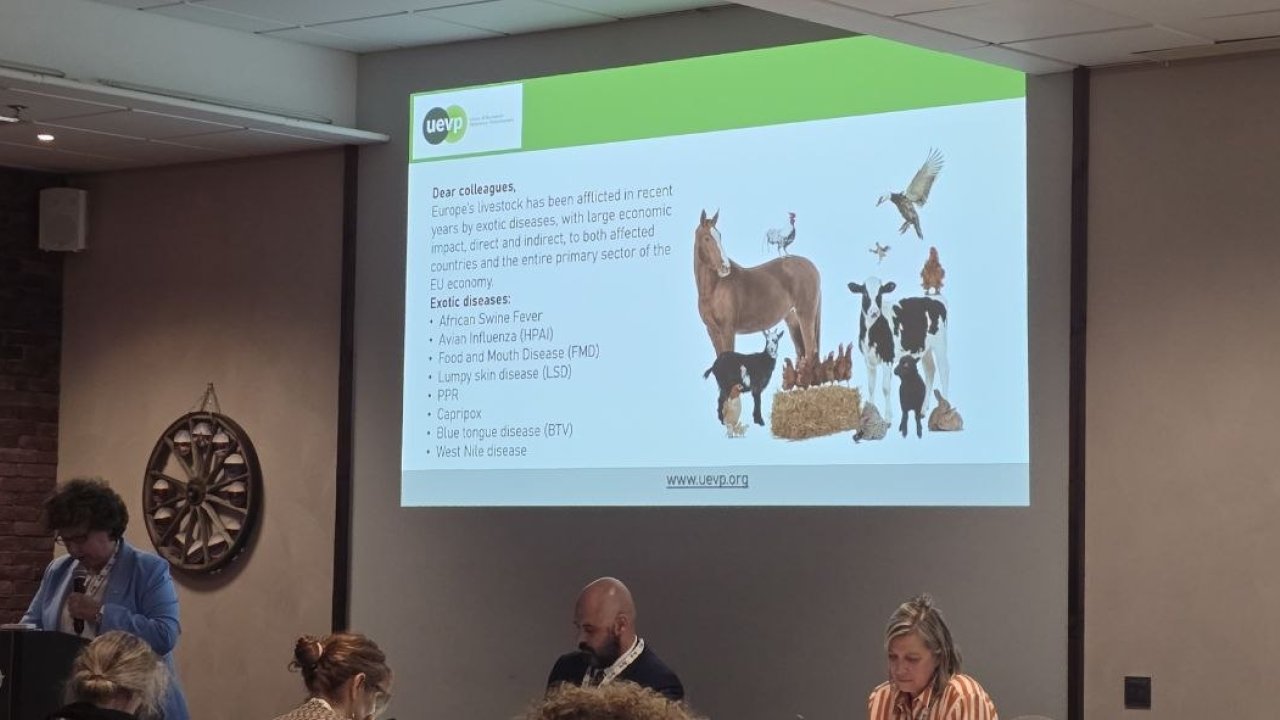
On June 11, 2026, during the UEVP General Assembly in Rovaniemi, Athina Trachili (Greece) delivered a report on the topic "Why exotic diseases are becoming challenging for Europe?". She spoke in detail about the reasons for the spread of transboundary animal diseases in Europe and shared the experience of Greece, which faced large-scale outbreaks in 2024.
Climate change and illegal trade as major risk factors
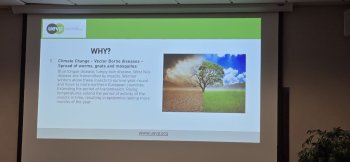
According to the rapporteur, climate change significantly contributes to the spread of vector-borne and transboundary diseases. Warming allows vector insects (in particular mosquitoes) to survive the winter even in the northern regions of Europe and remain active for much longer. This leads to longer epidemics of diseases such as Limpy Skin Disease, Sheep and Goat Pox (Capripox) and others.
A separate serious risk is illegal movement of animals. Illegal trade allows for the complete circumvention of biosecurity and veterinary control systems. Animals are often transported with forged documents, altered tags, and their true origin concealed. This significantly complicates the timely detection of pathogens and poses a threat of the rapid spread of such dangerous diseases as plague of petits ruminants (PPR), sheep and goat pox, and foot-and-mouth disease.

An additional factor is the high animal density within the single European market and the intensive movement of live animals between countries, which contributes to the "explosive" spread of viruses even before clinical signs of the disease appear.
The Greek experience: large-scale outbreaks and consequences
Since August 2024, Greece has faced simultaneous outbreaks of peste des petits ruminants, sheep and goat pox, and foot-and-mouth disease. Due to the strict application of European Regulation 2020/687, the country was forced to resort to the mass culling of animals. In total, more than half a million head of livestock were destroyed.
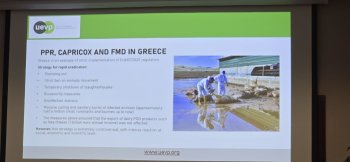
Such measures were accompanied by a total ban on animal movement, the temporary closure of slaughterhouses, and significant economic losses for farmers. Although compensation from European and national funds is provided for, its payment is often delayed, jeopardizing the survival of many farms.
Athina Trachili also drew attention to the serious psychological and ethical implications. Mass slaughter of animals places significant psychological strain on both farmers and veterinarians. In addition, there are environmental risks associated with the disposal of large numbers of carcasses.

Proposals for a change of approach
The rapporteur called for a review of the current model of managing transboundary diseases, which is largely based on harsh eradication measures and political decisions.
It was proposed:
- To press national and European politicians more actively on the need for reforms.
- To seek changes in European legislation to enable mandatory vaccination without automatically imposing trade restrictions on products from vaccinated animals.
- Reorient the approach from “political management” to science-based, including investing more in research into new vaccines and studying the safety of animal products.
- Strengthen internal biosecurity on farms.

Why is this important for Ukraine?
The issues of transboundary animal diseases, illegal movement, and the consequences of a harsh “cultivation” policy are extremely relevant for Ukraine. Our country also periodically faces outbreaks of dangerous infections, and the issues of biosecurity and rapid response to threats remain priorities.
European experience, particularly Greek, shows that exclusively repressive measures are not always the most effective in the long term, especially when diseases are already spreading across Europe. Finding a balance between livestock protection, farmers’ economic interests, and scientifically sound methods (including vaccination) is an important area for discussion in the Ukrainian context as well.
The NGO “Society of Veterinary Business Owners” continues to analyze European approaches to the management of transboundary animal diseases, as these issues directly affect the stability and development of the veterinary industry in Ukraine.
The article was prepared by Oksana Bilous, Secretary of the NGO “SVBO”.