FECAVA: Medicated feed for pets - risks, challenges and the position of the European Federation
The PO "Society of Veterinary Business Owners" has the status of observer in FECAVA (Federation of European Companion Animal Veterinary Associations) - a European federation uniting national associations of small animal veterinarians. Thanks to this status, each member of our Association has the opportunity to enjoy full membership rights in FECAVA, in particular, to participate in scientific events, gain access to educational materials and certification programs.
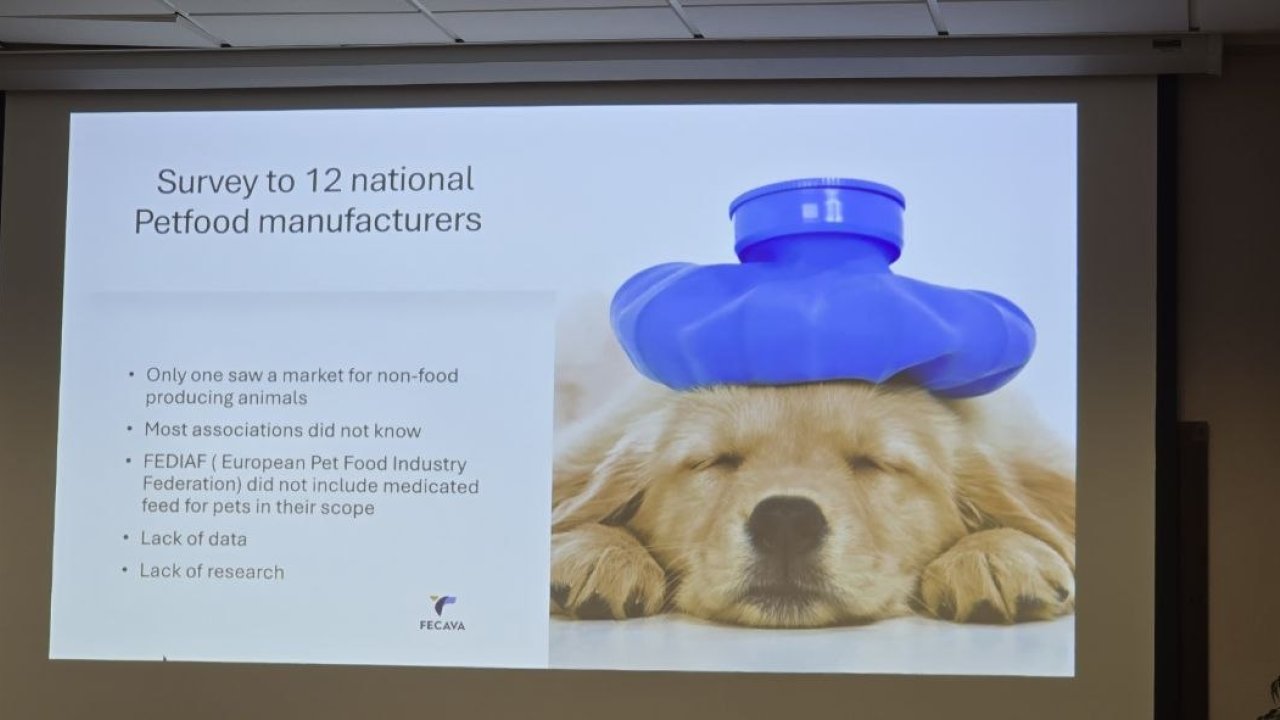
On June 11, 2026, during the UEVP General Assembly in Rovaniemi, FECAVA President Ann Criel (who is also UEVP Vice President) gave a presentation on the use of medicated feed for pets. This topic is increasingly being discussed in the European veterinary community.
Why did this topic arise?
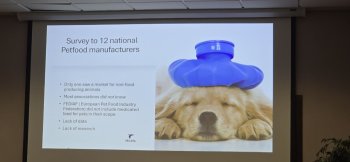
Medicated feed regulations were initially developed primarily for farm animals. For companion animals (dogs and cats), the regulatory framework remained much weaker, and research and data were insufficient. At the same time, products that combine feed and a medicinal substance began to appear on the market (for example, for the treatment of chronic kidney disease in cats).
FECAVA has analysed the risks of this approach and concluded that they are significant. Key risks of medical pet food
The report highlighted several key issues:
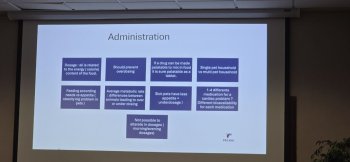
- Inaccurate dosage. The dose of the medicinal substance depends on the amount of food eaten. In sick animals with poor appetite, non-compliance with the therapeutic dose is possible, and in families with several animals - the risk of overdose if other animals have access to such food.
- Antimicrobial resistance. FECAVA expresses concern about the possible increase in bacterial resistance to antibiotics with their prolonged use through food.
- Complexity of therapy. In animals with multiple diseases that require different medications, the use of medicated food makes it much more difficult to monitor treatment.
- Reduced quality of veterinary care. There is a risk that owners will believe that “the food is already healing” and will stop regularly contacting the veterinarian to monitor the animal’s condition.
- Legal liability and storage. Issues of liability in the event of poisoning of children or other animals, as well as requirements for special storage and disposal of such feeds in clinics, remain unresolved.
The product Vicalis (Virbac) for cats with chronic kidney disease, which contains a drug substance in the food, was cited as an example. FECAVA is skeptical about the widespread implementation of this approach.
FECAVA's position and next steps
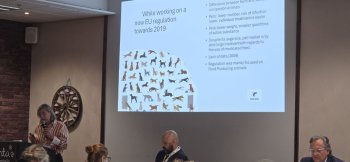
FECAVA is currently reviewing its official position on medical pet food and plans to conduct a survey among veterinarians to better understand the actual practice and attitudes of doctors on this issue. It is important to note that individual EU countries have the right to introduce stricter national rules than those provided for in European legislation. FECAVA recommends that national associations actively use this opportunity to minimize risks.
Additional opportunities from FECAVA for veterinarians
During the presentation, new opportunities for practicing veterinarians were also presented:
- Individual FECAVA membership (€50 per year) - for veterinarians from countries where there is no national small animal association (e.g. Spain). This gives access to FECAVA materials, events and the community.
- Certification programs for General Practitioners in internal medicine and surgery. The program lasts 1–1.5 years, includes case collection and final certification.
- Online certifications (particularly in anesthesiology and analgesia) based on webinars.
The next FECAVA EuroCongress was also announced, to be held in September 2027 in Antwerp (Belgium).
Why is this important for Ukrainian veterinarians?
The issue of using medicated pet food is not limited to Europe. The market for such products is also growing in Ukraine, and veterinarians are increasingly faced with questions about their effectiveness, safety, and ethical use.
Participation in European discussions allows Ukrainian veterinarians to be aware of risks, arguments for and against, as well as European approaches to regulation. This is especially relevant in the context of European integration and the possible approximation of Ukrainian legislation to European standards.
The PO "Society of Veterinary Business Owners", having observer status in FECAVA, continues to inform its members about important European discussions and opportunities that membership in European veterinary associations opens up.
Andrii Klietsov
Head of the Non-profit Organizations "Society of Veterinary Business Owners"
FEEVA: Update on Equine Veterinary Practice (Joe Collins, President of FEEVA)
The Association of Veterinary Owners has observer status in European veterinary structures, in particular in UEVP and its sections. Thanks to this, members of the Association have the opportunity to receive up-to-date information on European standards and practices in various areas of veterinary medicine.
Our organization currently does not have any veterinarians who specialize in working with horses, however The Association is open to joining such specialists and is ready to expand its activities in this direction.
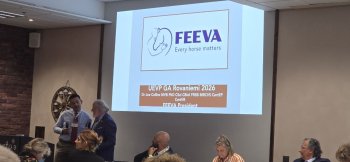
On June 11, 2026, during the UEVP General Assembly in Rovaniemi, FEEVA (Federation of European Equine Veterinary Associations) President Joe Collins gave an update on current issues in equine veterinary practice. The report covered two important topics: standardization of veterinary examinations before purchasing a horse and ethical challenges related to assisted reproductive technologies.
Pre-purchase veterinary examinations: standardization and ethical aspects
One of the priorities of FEEVA is the work of the working group on pre-purchase veterinary examinations. The group resumed its work last year and is actively working on improving approaches to these examinations.
The main focus is currently on the following issues:
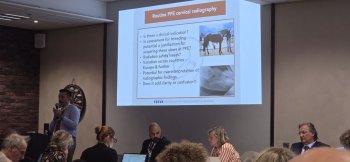
X-ray of the horse's neck during examination (especially in cases where there is no clinical indication for the procedure).
Dental examination, including examination of the incisors, canines, gums, and if necessary, the buccal mucosa and canines. An important direction is the change in the philosophy of the examination itself. Instead of a simple "fit/unfit" model, the group aims to develop an approach in which the veterinarian provides the client with more detailed advice on the likely suitability of the horse for the intended future use.
The following issues were also discussed:
- Increased radiation hazard to personnel during radiography of large horses.
- Requirements for certain X-ray projections, which are often dictated by export requirements (e.g. to the USA).
- Behavioral problems of the horse, which often remain outside the scope of a standard clinical examination.
- Situations where a client requests two different reports (one for price negotiation, the other for insurance purposes).
FEEVA is working on developing guidelines that will help veterinarians, especially young professionals, to conduct such examinations more confidently and ethically.
Ethical Challenges of Assisted Reproductive Technologies in Equine Breeding
The second important topic concerned the rapid development of assisted reproductive technologies in equestrian sport. In particular, it was about procedures such as oocyte retrieval (Ovum Pick-Up), intracytoplasmic sperm injection and cloning. Although these technologies open up new possibilities (for example, obtaining offspring from mares that continue their active sports careers), they also carry serious ethical and welfare risks.
Among the main concerns:
- The use of technology mainly for commercial purposes (maximizing the number of offspring from elite mares).
- Insufficient and uneven regulation across Europe.
- The risk that commercial pressures will prevail over animal welfare considerations.
FEEVA stresses the need for the veterinary community to play an active role in shaping ethical standards and recommendations in this area. Without veterinary leadership, these issues can be influenced solely by commercial interests. This is especially important given the growing public concern for animal welfare in sport.
Why is this important for Ukraine
Sport horse breeding and the market for veterinary examinations before purchasing horses are gradually developing in Ukraine. The issues of standardization of such examinations, ethical approaches to reproductive technologies and horse welfare are also relevant for Ukrainian veterinarians working in this field.
European experience shows that these issues require a systematic approach, the development of clear recommendations and an active position of the veterinary community. Participation in European discussions allows Ukrainian specialists to be aware of current trends and best practices.
The PO "Society of Veterinary Business Owners" is open to joining veterinarians specializing in working with horses and is ready to develop this area of activity.
The article was prepared by Oksana Bilous
Secretary of the PO "Society of Veterinary Business Owners"