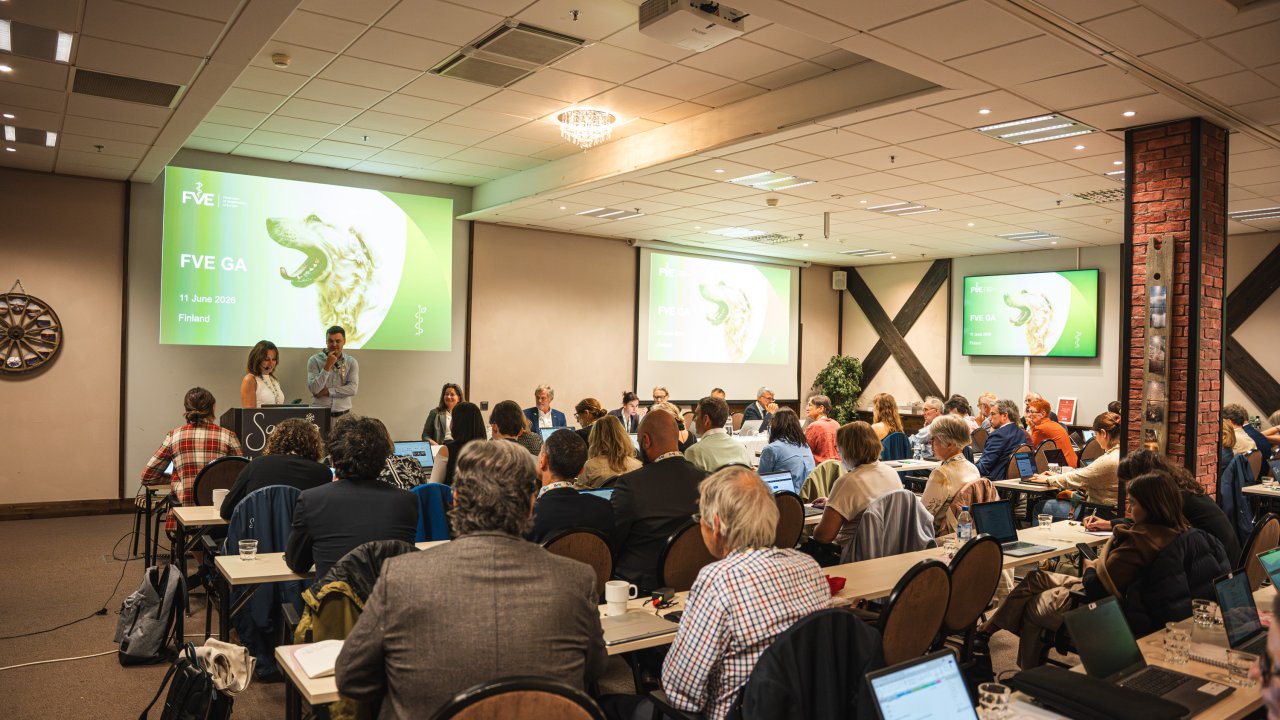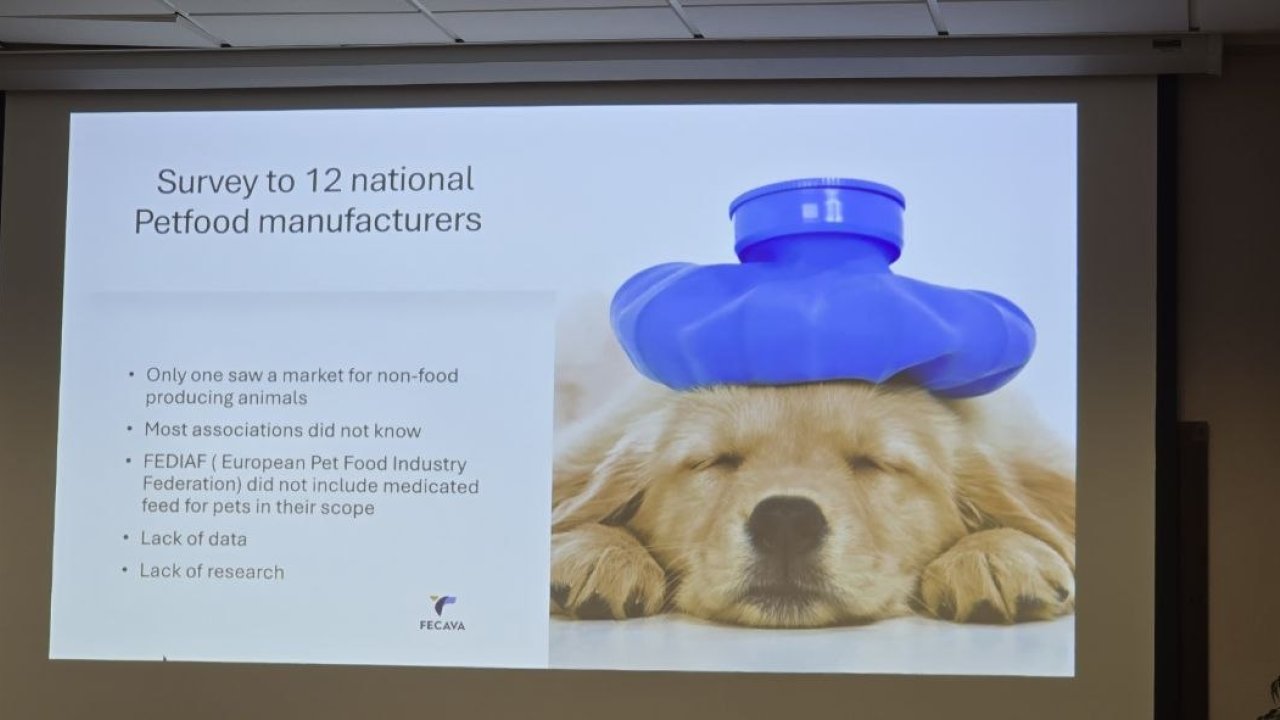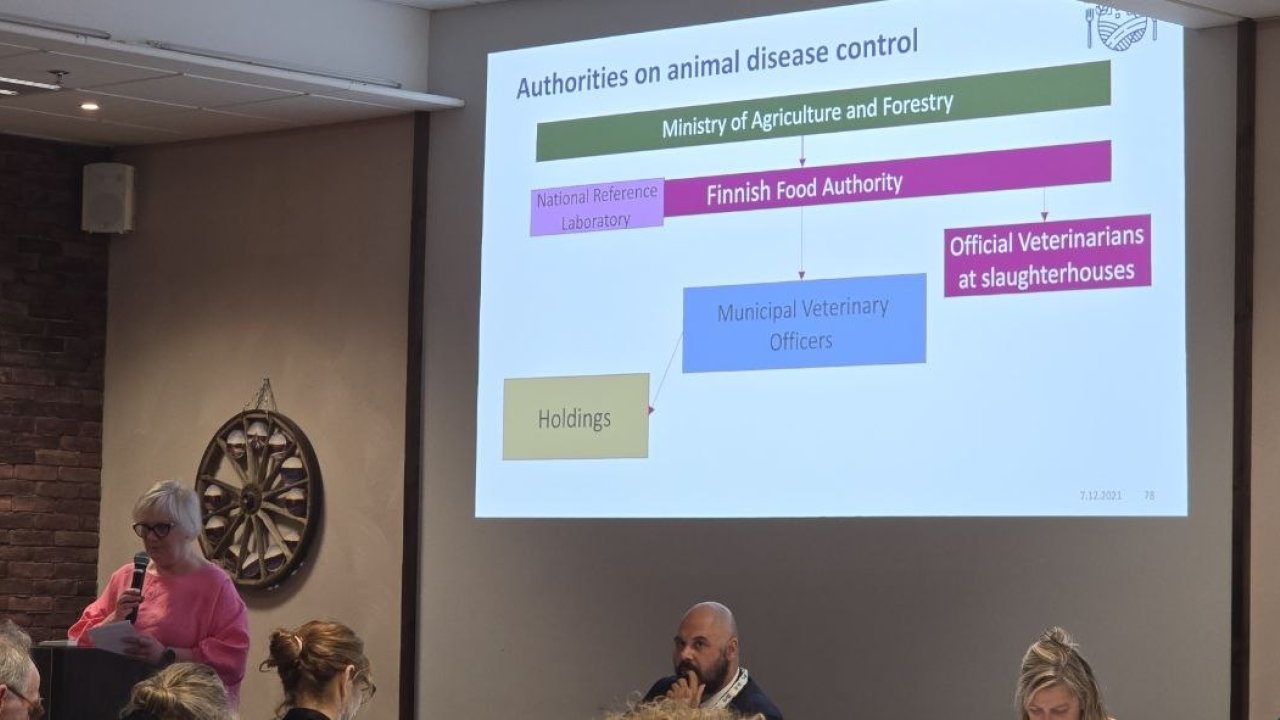
On June 11, 2026, during the UEVP General Assembly in Rovaniemi, the Finnish experience in organizing veterinary services at the municipal level was presented and the new animal welfare law, which significantly changes approaches to dog breeding, was discussed. The information was presented within the agenda items dedicated to the veterinary crisis preparedness model and the regulation of dog breeding.
Municipal cooperation and emergency response system.
In Finland, a significant part of environmental health and veterinary services is organised at the municipal level. Municipalities often combine these functions within joint operational areas. Such areas include both practicing veterinarians and supervisory authorities with the authority to make immediate restoration decisions if previous steps have not been taken.
An important feature of the Finnish system is the coordination of actions between private, municipal and state veterinarians during emergencies and epidemics. The decision on who will lead the elimination of an outbreak is made depending on the professional expertise of available specialists, and not only on affiliation with a particular structure.
It was also noted that the organization has the necessary equipment to work with regional diseases. Most veterinarians involved in emergency response are municipal employees and receive a salary for this. Private veterinarians who participate in such operations receive compensation both for participation in mandatory training events and for direct work during emergency events.
The organization is currently reviewing its training and event plans, as previous assumptions about the need for individual trainings have proven to be irrelevant. This allows for more efficient use of resources and better response to real needs.
Finland's new Animal Welfare Act 2024 and dog breeding regulation.
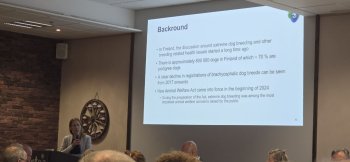
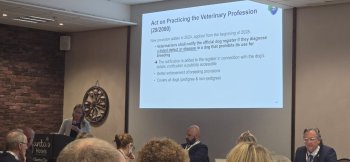
The second important topic concerned the Finnish animal welfare legislation, which entered into force in early 2024 after almost a decade of discussion. The law clearly states that animal breeding should contribute to the birth of viable, functional and healthy individuals. Breeding that may lead to the inheritance of diseases or traits that significantly impair the welfare of the animal is prohibited.
It is particularly important that animals that cannot breathe normally due to physiological conditions or disease are legally prohibited from breeding. Animals that have undergone certain surgical procedures to correct problems (e.g., breathing problems, orthopedic corrections, or bite corrections) are also prohibited from breeding.
A key control tool is the obligation of veterinarians (both private and public) to report to an official register any diagnosed hereditary diseases that make an animal unsuitable for breeding. The information from this register is public, which ensures transparency and makes it more difficult to use such animals in breeding. This requirement applies to all dogs - both purebred and mixed-breed.
Currently, a special working group is working in Finland to prepare a list of “notifiable conditions”. The group includes representatives of breeders’ associations, control authorities, animal welfare experts and veterinary organizations. The criteria for including a condition in the list are heredity, scientific validity, harm to the animal’s welfare and the possibility of an unambiguous diagnosis by a veterinarian.
The issue of brachycephalic breeds was discussed separately. Although society often focuses on breeds (e.g. French bulldog, pug), Finnish legislation focuses not on the breed as such, but on specific harmful traits (breathing problems, excessive skin folds, bulging eyes, etc.). This allows the same standards to be applied to all dogs regardless of origin.
The law also regulates behavioral characteristics: animals that show excessive fear or aggression are not allowed to breed. In addition, every cesarean section must be registered, and after two such operations, the dog loses the right to further breeding.
Why is the Finnish experience important for Ukraine?
Both topics - the organization of municipal veterinary services and the system of response to emergencies, as well as strict regulation of animal breeding from a welfare perspective - are relevant for Ukraine.
Finland demonstrates a model in which veterinarians of different ownership forms (private and municipal) coordinate actions during crisis situations, and private specialists receive compensation for their participation in such events. This could be a useful example in improving the Ukrainian system of response to disease outbreaks and emergencies.
Regarding breeding regulation, the Finnish approach shows how scientifically based criteria, mandatory reporting by veterinarians and a public register can be combined to limit the breeding of animals with severe hereditary problems. In the context of Ukraine’s European integration and future harmonization of legislation with European standards, such experience deserves attention.
The NGO“Society of Veterinary Business Owners” continues to analyze European practices that may be useful for the development of the veterinary industry in Ukraine.
Andrii Klietsov
Head of the NGO Board "Society of Veterinary Business Owners"