Veterinary Medicine Safeguarding National Security: Biological Threats, Agro-terrorism, and the Realities of War at the FVE Assembly 2026
Modern global challenges compel veterinary medicine to extend far beyond the scope of conventional clinical practice. Today, the veterinary professional is a strategic expert standing on the front lines of safeguarding national security, food stability, and public health.
This strategic direction is not new to our team. Back in 2024, Andrii and Nataliia Klietsov had the honor of opening the World Veterinary Association Congress (WVAC2024) in Cape Town, where they showcased the resilience of Ukrainian veterinary medicine during the war. You can view materials from that event in our post "Speakers at the WVAC2024 International Congress in Cape Town" and in the official May 2024 issue of VetNews.
http://uacbbc.org/ua/publications/news/speakers-at-the-wvac2024-international-congress-in-cape-town
https://prezi.com/view/3zEcscpDiNLkqnpCujZt/
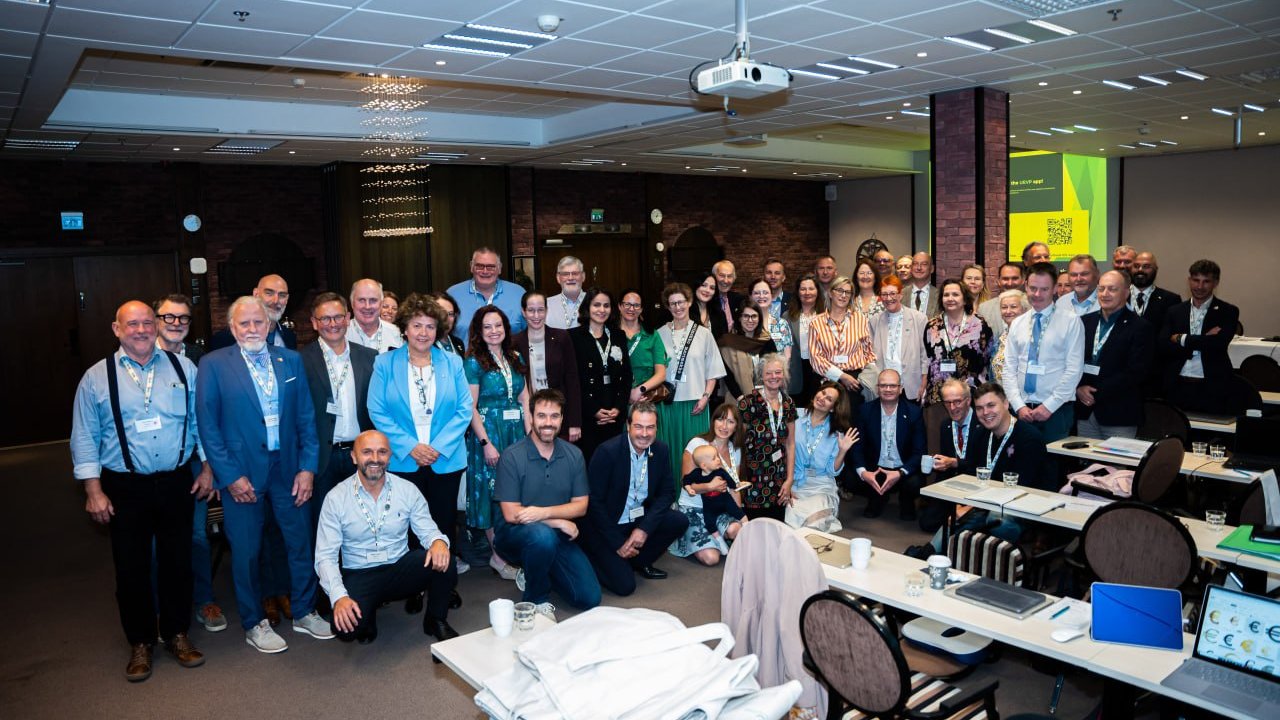
Today, in 2026, this topic was explored in greater depth at the General Assembly of the Federation of Veterinarians of Europe (FVE) in Finland.
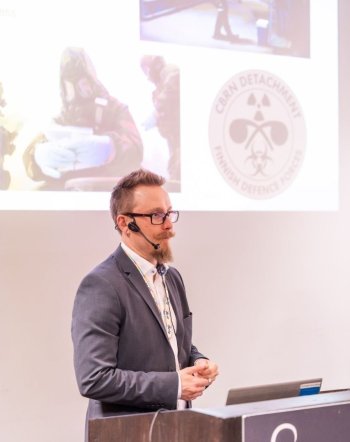
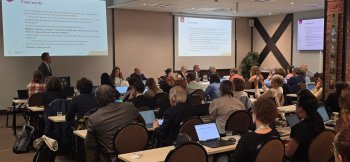
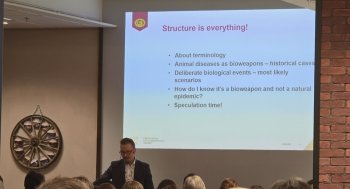
The session’s guest speaker, Dr. Olli Jokinen—a veterinary officer with the Finnish Defence Forces (Centre for Military Medicine, Department of Force Health Protection and Medical Intelligence)—delivered a comprehensive presentation on the role of veterinarians in biological warfare and the management of deliberate biological threats. The NGO "Society of Veterinary Business Owners" has prepared a detailed analysis of this presentation for the Ukrainian veterinary community.
Military Terminology: Distinguishing Between Security Concepts
In civilian veterinary practice, the concept of biosecurity is often viewed as a matter of daily routine—such as disinfection, handwashing, or cleaning vehicles before cross-border transport. However, in military medicine, the classification is far more rigorous:
Bio-defense and Bio-security: In a military context, these are components of "hard security" or "hard defense." They constitute a comprehensive set of measures aimed at countering biological threats, responding to them, and mitigating the consequences of such incidents.
CBRN Detachments: These specialized units within the Finnish Defence Forces are trained to operate in environments involving chemical, biological, radiological, and nuclear threats. Experts not only carry out the decontamination of areas and personnel but also collect forensic samples that can be officially used in international courts to substantiate war crimes.
Centre for Biothreat Preparedness: This is a joint specialized expert network in Finland involving the Finnish Defence Forces (FDF), the Finnish Food Authority, and the Finnish Institute for Health and Welfare (THL) working in collaboration.THL veterinarians and the Defence Forces also collaborate on a regular basis, particularly during epidemic investigations.
Classification of Deliberate Biological Events (DBEs):
Biological weapons have been used for millennia, long before humanity understood the true causes of infections. Since livestock and agriculture play a critical role in any country's food security and livelihoods, they become prime targets for biological attacks or sabotage. The speaker identified four types of deliberate biological events:
- Biological warfare (Bio-warfare): The use of biological agents on the battlefield, against the civilian population, or against key targets during hostilities. Such acts offer a high degree of anonymity for the aggressor nation.
- Biological crime (Bio-crime): A similar act committed by an individual to achieve personal goals.
- Bioterrorism: Attacks by radical groups driven by political, religious, or ideological agendas, aimed at gaining media publicity or inciting mass panic.
- Agro-terrorism: Malicious acts aimed directly at destroying crops or causing mass infection of livestock to induce famine or inflict massive economic damage.
International law, including the 1925 Geneva Protocol and the Biological Weapons Convention (BWC), strictly prohibits these weapons.
However, unlike the regime for chemical weapons, the BWC framework currently lacks an international verification and oversight mechanism. In the event of suspicion, member states are compelled to channel their concerns directly through the UN Secretary-General’s mechanism.
Why are biological weapons used, and which pathogens pose the highest risk?
Biological agents are extremely inexpensive to produce compared to nuclear or conventional weapons (such as artillery or missiles) when the goal is to inflict mass casualties over a large area. Their primary objective is to sow widespread panic—even through disinformation campaigns alone, where no actual weapon is required. A major drawback for the aggressor is that biological agents render the affected territory unusable in the short term; one cannot deploy one's own troops there without risking their exposure. To maintain anonymity, the attacker most often selects a disease that is endemic or naturally occurring in the region.
The official list of Tier-1 select agents includes glanders, anthrax, and tularemia. Selection criteria for this group include a low infectious dose, the potential to cause mass casualties, and a history of use. Other pathogens are considered potential components for weapon development:
- Anthrax: A classic biological agent. History records both Great Britain’s plans during World War II (Operation Vegetarian, involving the use of infected cattle cakes to cause famine in Germany) and the large-scale Soviet program, in which civilian biotechnology institutes concealed facilities capable of producing tons of smallpox and anthrax agents, and where an accidental spore leak in Sverdlovsk claimed the lives of at least 68 people. Another example is the deadly spore-laden letters sent in the United States in 2001.
- Glanders and Brucellosis: Glanders is classified as a Tier-1 agent; it is potentially lethal to humans via aerosol exposure and highly dangerous due to the difficulty of initial diagnosis, which allows an outbreak to go undetected for a prolonged period.
- Tularemia: Highly infectious via food, water, and direct contact. Aerosol dispersal of 150 kg of the agent in a densely populated area could affect up to 250,000 people. The Type A strain is typically used for weaponization.
- Q Fever: One of the most highly infectious known pathogens, where a single bacterium is sufficient to cause infection. It has a low mortality rate but an extremely high morbidity rate; notably, 50% of human cases are asymptomatic, posing a serious threat to both animal and public health.
12 Clues: How to Distinguish Sabotage from a Natural Epidemic
Veterinary professionals must possess a high level of epidemiological intelligence. A military expert has outlined 12 critical indicators of a deliberate biological event:
- A large number of animal or human casualties with no clear natural cause.
- Significantly higher mortality or fatality rates than expected for a specific disease.
- The emergence of a disease that is atypical or exotic for the region.
- Outbreak of a vector-borne disease in the complete absence of natural insect vectors and without a history of animal travel.
- Point source outbreak with an epidemic curve that is significantly steeper than the natural one (sign of aerosol dispersion).
- Multiple outbreaks of infection occurring simultaneously in completely different locations.
- Genetic or phylogenetic analysis of samples shows a strain that is not geographically native to the area.
- A significantly lower level of exposure among protected groups (for example, military personnel wearing gas masks or animals kept in airtight hangars during the attack).
- Mass die-off of wild or domestic animals preceding or accompanying human illness.
- An inverted or synchronous pattern of infection spread: for example, when humans contract the pulmonary form of anthrax simultaneously with, or even before, cases appear among animals.
- Clinical presentation of a known disease in a highly atypical form.
- Direct physical evidence: signs of break-ins at veterinary facilities or grain stores, the discovery of suspicious cylinders or containers, or the presence of unauthorized individuals in livestock holding areas.
Artificial Intelligence and Disinformation: Panic Without a Single Shot
The Assembly examined a modern threat in detail: the use of artificial intelligence to generate fabricated photos and videos of dangerous animal disease outbreaks on social media. Deliberate disinformation can trigger the same level of public panic, deal a blow to the tourism industry, block international trade, and disrupt military exercises as a real biological agent.
The primary shield against this weapon is a stable, active, and reliable presence of veterinary associations—alongside public health officials—in the media landscape well before any crisis begins. When business owners and the public are accustomed to relying on a trusted, authoritative source of information, any external disinformation attack by an adversary will be instantly neutralized.
The Reality in Ukraine: Infrastructure Warfare Instead of Biological Weapons
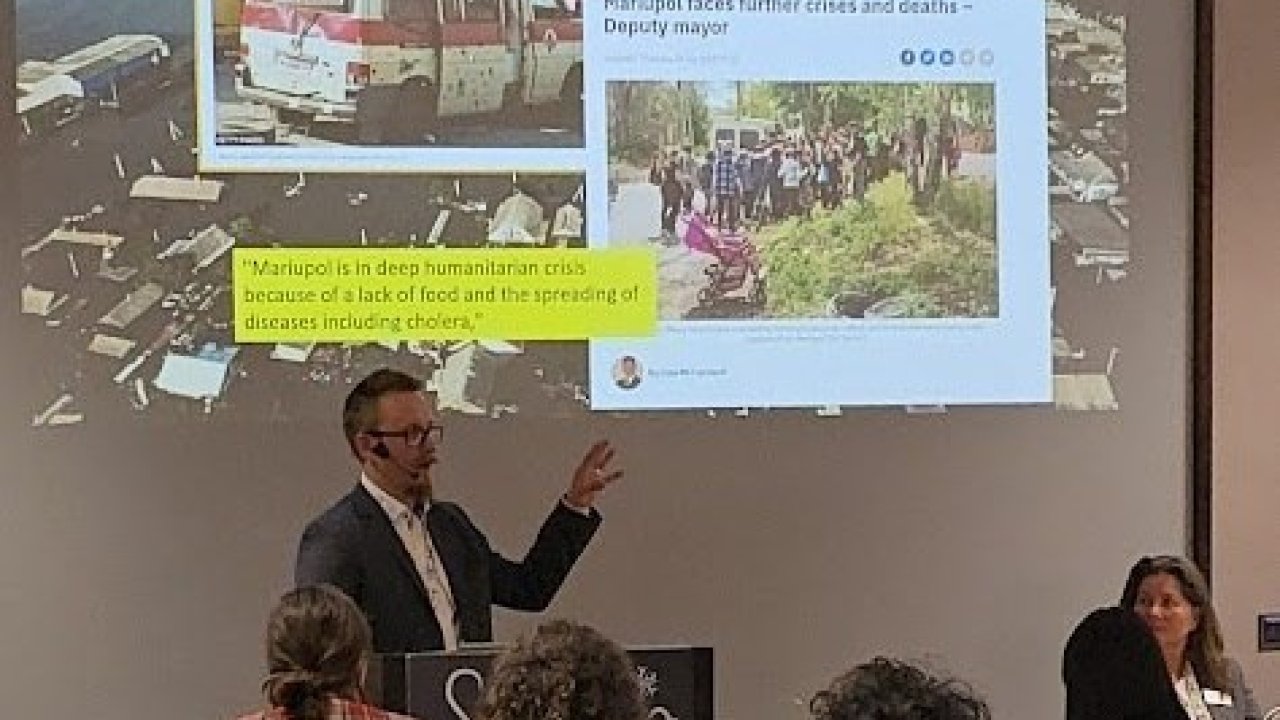
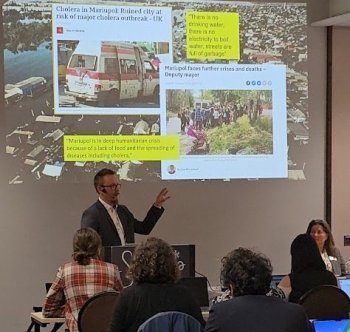
The key message of the Finnish expert's report—which military veterinarians from the Finnish Defence Forces now use as a primary case study in their lectures—directly concerns the war in Ukraine. The speaker demonstrated the catastrophic consequences of the destruction of the Nova Kakhovka dam, classifying the act as a large-scale war crime.
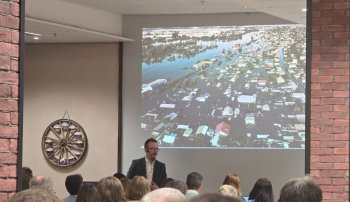
The military expert’s final conclusion is unequivocal: a modern aggressor has no need to employ biological weapons—which are costly and banned under international conventions. It suffices to carry out systematic terrorist attacks on critical civilian infrastructure, such as water supply systems, power grids, sewage pumping stations, and healthcare facilities. When electricity and clean water vanish from cities, infectious diseases that had previously been conquered inevitably return and begin to spread rapidly on their own.
The Finnish Defence Forces are currently actively preparing municipalities, utility services, and water purification systems for precisely this scenario—cities operating without electricity or water supplies amidst potential disease outbreaks—drawing upon Ukraine’s difficult yet invaluable experience.
The author of this material is Dr. Olli Jokinen.